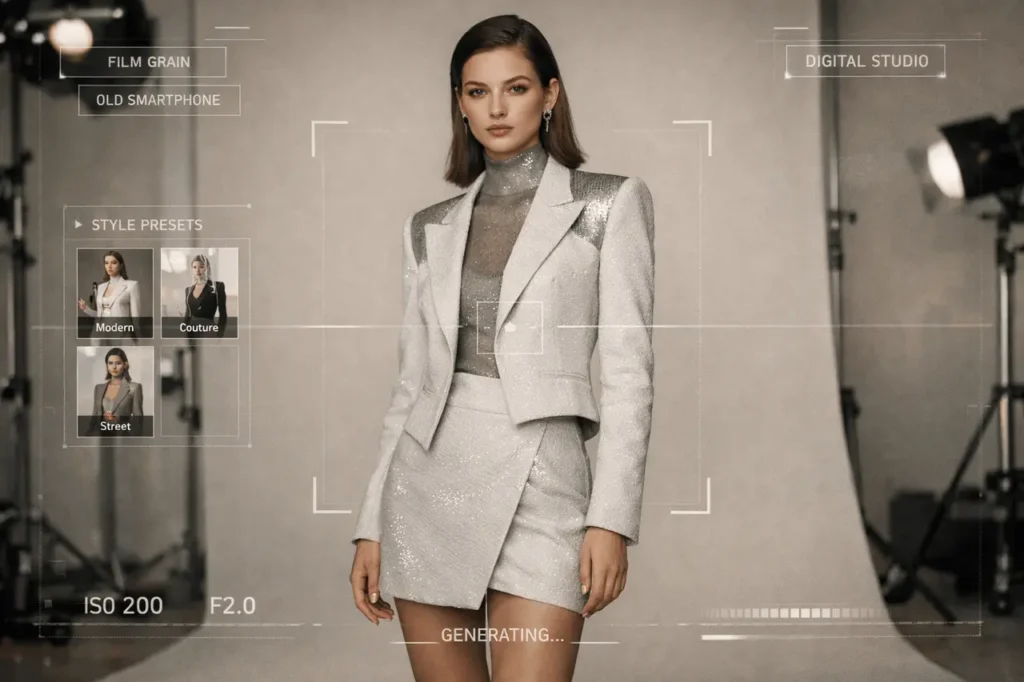
Higgsfield SOUL 2.0 is an advanced AI image generation system designed specifically for top-end, fashion-forward visuals. Unlike standard text-to-image systems, it can recognize visual eras, specific cultural references, and the sophisticated aesthetics of fashion.
Created to produce high-quality editorial and campaign images, Higgsfield SOUL 2.0 combines artistic intelligence with the ability to create a realistic camera and tools for personalization, producing precise, stylistically correct outputs rather than standard AI art.
What Is Higgsfield SOUL 2.0?
Higgsfield SOUL 2.0 is a sophisticated Text-to-Image AI algorithm that combines the latest in fashion, computer simulation, and consistency of characters into a complete system.
It provides three integrated modes of creation:
- SOUL – Core text-to-image generation
- SOUL Reference – Guided generation using a reference photo
- SOUL ID – Personalization and consistency of characters across images
One model is the basis for the three workflows, eliminating the need for separate applications.
Three Modes Inside One Model
Feature Comparison Table
| Mode | Primary Function | Best For | Output Strength |
|---|---|---|---|
| SOUL | Text-to-image generation | Creative ideation | Stylistic accuracy |
| SOUL Reference | Guided image creation | Campaign continuity | Visual alignment |
| SOUL ID | Character personalization | Brand storytelling | Consistency across shoots |
This unifying structure is what makes Higgsfield SOUL 2.0 especially beneficial for creators, brands, and agencies that work across campaigns.
What Makes Higgsfield SOUL 2.0 Different?
Fashion Context Awareness
The majority of AI models interpret style as literal. Higgsfield SOUL 2.0 interprets it culturally.
It understands:
- Visual eras (e.g., early 2000s editorial aesthetics)
- Subculture styling cues
- Fashion-specific posing language
- Internet-native aesthetics
Instead of creating similar costumes, it produces images that express genuine creative intention.
Camera-Aware Image Generation
SOUL 2.0 responds to camera-related commands with precision and technical accuracy.
Examples include:
- “Shot on an old smartphone.”
- “Warm film grain”
- “Modern digital studio”
- “Analog texture”
The model can adjust grain structure, tone, dynamic range, and color rendering to suit the requested medium. Camera-awareness bridges the gap that exists between AI output and actual photography.
Better Physics, Better Poses
The most prominent improvements in Higgsfield SOUL 2.0 include greater realism in posture and body language.
The model creates:
- Natural movement and stance
- Fashion-correct posing
- Reduced stiffness
- Improved consistency in anatomical structure
This enhancement makes it ideal for:
- Editorial spreads
- Fashion campaigns
- Social-first branding content
- E-commerce visuals
The output shows the way real models stand, move, and interact with clothes.
Creative Supervision and Curation
Higgsfield SOUL 2.0 was developed under the supervision of industry experts from the creative field. The objective is to set the new standard for premium aesthetic AI images.
Instead of optimizing solely to improve technical sharpness, the model focuses on:
- Current fashion awareness
- Cultural fluency
- High-fashion editorial standards
- Internet-native visual language
This makes it especially closely linked to creative directors and digital-first brands.
Real-World Use Cases
Use Cases by Industry
| Industry | Application | Benefit |
|---|---|---|
| Fashion | Editorial lookbooks | Campaign-ready visuals |
| E-commerce | Product styling shots | Reduced production cost |
| Creative Agencies | Concept mockups | Faster client approvals |
| Influencer Branding | Personal content | Consistent character identity |
| Media & Publishing | Visual storytelling | Trend-aligned imagery |
For fashion brands, SOUL 2.0 reduces dependency on full production shoots during concept development.
For agencies, speed up the ideation process while preserving stylistic integrity.
How Higgsfield SOUL 2.0 Works?
At its core, Higgsfield SOUL 2.0 is a generative, diffusion-based image model trained on high-end aesthetic data and carefully curated creative inputs.
It processes:
- Text prompts
- Optional reference images
- Personalization identifiers (SOUL ID mode)
- Camera-style instructions
The system synthesizes images that match both stylistic direction and context fashion signals.
Since the model incorporates personalization and reference guidance directly, it avoids the fragmentation that can occur when working with multiple tools, such as AI workflows.
Advantages vs Limitations
Advantages
- Fashion-context understanding
- Camera-style simulation
- High-end editorial output
- Consistent character generation
- Unified multi-mode architecture
Limitations
- It requires well-structured prompts for the best results.
- Creative output is based on the stylistic clarity of the user
- Ideal for aesthetic-focused projects and not for renderings of products that are technical
As with all AI systems, the output quality improves with increased accuracy.
Why Higgsfield SOUL 2.0 Matters?
The generative AI market is flooded with models optimized for wide-image generation. A few are specifically designed to inspire creativity in fashion and culture.
Higgsfield SOUL 2.0 solves that gap:
- Integrating the culture of a Generation
- Visual language understood by creatives
- Delivering camera-authentic aesthetics
- Reducing “AI look” artifacts
It makes it an important tool to enhance branding.
Practical Considerations for Businesses
Before deciding to adopt Higgsfield SOUL 2.0, teams should think about:
- Brand style guidelines to ensure rapid uniformity
- Defining the character identity frameworks in the context of SOUL ID
- Integration of outputs into existing workflows for design
- Checking outputs for conformity to brand standard
If implemented strategically, the model has the potential to reduce time-to-production while maintaining aesthetic sophistication significantly.
Secondary Keywords Integrated
- AI image generation
- Text-to-image model
- Fashion AI model
- Camera-aware AI
- Editorial AI visuals
My Final Thoughts
Higgsfield SOUL 2.0 is the shift in AI image creation from standard output to more fluid, fashion-conscious creative. By combining three different creation modes that are SOUL, SOUL Reference, and SOUL ID, it simplifies workflows while also delivering high-quality editorial images.
Its advanced camera-awareness physics, enhanced camera awareness, and deep understanding of visual language make it a great choice for companies and creatives working in fast-moving online environments.
As AI imaging continues to develop, Higgsfield SOUL 2.0 sets a new standard for intentional, high-end artistic output, creating a bridge between technology and creativity with the highest level of precision.
FAQs
1. Why is Higgsfield 2.0 employed to do?
Higgsfield SOUL 2.0 is used to create the highest-end AI images, specifically for fashion-related editorials and campaign images, branding content, and conceptualization.
2. What does SOUL 2.0 differ from other models for text-to-image?
Unlike general-purpose models, Higgsfield SOUL 2.0 is aware of contextual fashion, visual eras, cultural context, and camera designs, resulting in more precise and stylized images.
3. What exactly is SOUL Id mode?
SOUL ID is an individualization mode that allows the same character to be generated across multiple images, making it ideal for branding and campaign continuity.
4. Does SOUL 2.0 duplicate specific camera types?
Yes. Model responds to commands such as “film grain,” “old smartphone,” or “digital studio,” adjusting the image’s texture to match the camera’s style.
5. Is Higgsfield SOUL 2.0 suitable for commercial advertising campaigns?
Yes. It was specifically designed to produce high-quality editorial and campaign images, with improved real-world performance and a fashion-conscious output.
6. Does SOUL 2.0 take over traditional photography?
It can be a very effective tool for production and creativity, particularly in concept development and digital marketing campaigns. However, businesses must evaluate use cases in relation to their brand’s needs and production objectives.
Also Read –