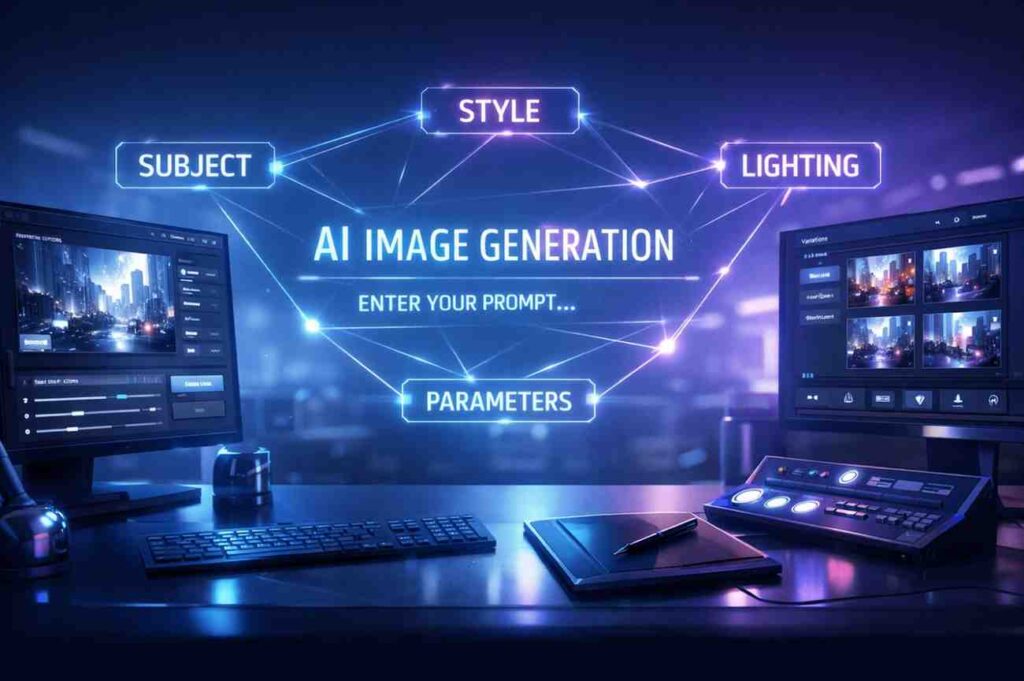
Midjourney is one of the most popular AI tools for creating images, which allows users to create amazing artwork with just text descriptions. Accessible via Discord and a variety of other channels, it can interpret natural language inputs and create pictures that range from realistic images to surreal landscapes. The key to getting the most out of it lies in the creation of efficient prompts. A well-constructed prompt functions as a model, helping the AI to provide accurate and superior results. Inputs that are poorly written can result in uninformed or generic outputs, whereas refined ones can produce professional-quality images for advertising, concept art or personal projects.
As AI art advances, understanding prompt engineering has become a must for designers, artists and even hobbyists. This article will explore the Best MidJourney Prompt Formula, the most efficient MidJourney prompt method, derived from the insights of experts as well as practical applications. We’ll go through it in steps, give concrete examples, and provide suggestions for optimising. In the end, you’ll have the necessary tools to create stunning images consistently.
What is Midjourney?
MidJourney is an AI-powered image generation tool that creates high-quality visuals from text prompts. It allows users to describe scenes, styles, or concepts in natural language and instantly generate artwork. Widely used by designers, marketers, and digital artists, MidJourney is known for its artistic depth and cinematic output. The platform runs primarily through Discord and continuously evolves with new model versions that improve realism and creative control.
Understanding the Basics of Midjourney Prompts
In essence, the basis of a Midjourney message is basically a written instruction which describes the image you want to see. Start by typing /imagine in Discord, then your description. The AI uses this information to produce four variations that you can then upscale or remix.
Key principles include keeping prompts concise yet descriptive. Shorter phrases are more effective than long lists as they offer the AI more freedom of interpretation and focus on the essentials. Make sure to use specific terms for topics or environments as well as styles to avoid confusion. For example, instead of broad words such as “big,” opt for “towering” or “colossal” to create more powerful visuals.
Incorporate elements such as medium (e.g. oil painting or digital rendering) and lighting (e.g. neon glow, golden hour) as well as mood (e.g. tranquil, serene or chaotic) to give depth. Do not include negative guidelines in the main text. Make use of the –no parameter to allow exclusions, like trees are not allowed to be removed in order to avoid undesirable elements.
Best MidJourney Prompt Formula: The Ultimate Midjourney Prompt Formula
After analysing various approaches, a reliable formula emerges: Subject + Descriptors + Style + Context/Environment + Details + Parameters. This format guarantees the clarity and control needed while balancing creativity and specificity.
- Subject: The main object of the focus, for example, an object, person, or even a scene.
- Descriptors: Adjectives detailing appearance, traits, or actions.
- Style: Artistic influence, like cyberpunk or Renaissance.
- Environmental/Context Context/Environment: The settings that define the context of the matter.
- Details: Enhancements like lighting, colours, or composition.
- Parameters technical tweaks, which are accompanied by -(e.g., –ar 16:9 for aspect ratio). (e.g. 16:9 for the aspect ratio).
The formula is able to adapt to various demands, from realistic portraits to abstract ideas. It’s versatile and allows people to blend elements to produce different results. For more advanced users, incorporate images using URLs or consistency between characters with –cref.
Best MidJourney Prompt Formula: The Formula with explanations
Let’s break down each of the components.
Subject
Start with the principal element to establish the prompt. The specificity of the prompt is what sets the base. For instance, “a young elf archer” is more effective than “a person,” since it directs the AI towards fantasy elements.
Descriptors
Include the use of adjectives and phrases. Define physical characteristics such as emotions, feelings, or actions, “majestic and flowing with silver locks that are poised in a dynamic position.” This increases the vividness of the demand.
Style
Definition of the aesthetic. Art movements, artists (pre-1912 to ensure public domain security) or media: “in the style of surreal digital painting created by Studio Ghibli.” This affects the overall style from a whimsical aesthetic to a hyper-realistic one.
Context/Environment
Set the subject in a setting: “in a misty, enchanted forest at dusk.” This can add narrative and a sense of immersion, assisting the AI in creating well-balanced pictures.
Details
Add sensory elements to the mix: “soft diffuse lighting, bright pastel colours, a wide-angle composition.” Include moody phrases like “dreamy and romantic” to create a gloomy tone.
Parameters
End with the following controls: –ar 3-4 for portrait orientation, to 200 for slight stylisation, and –chaos 10 for small variations. The fine-tuned generation is not altered in the description of the main feature.
Best MidJourney Prompt Formula: Real Examples Using the Formula
Here are practical apps that showcase a variety of outputs.
Example 1: Realistic Portrait
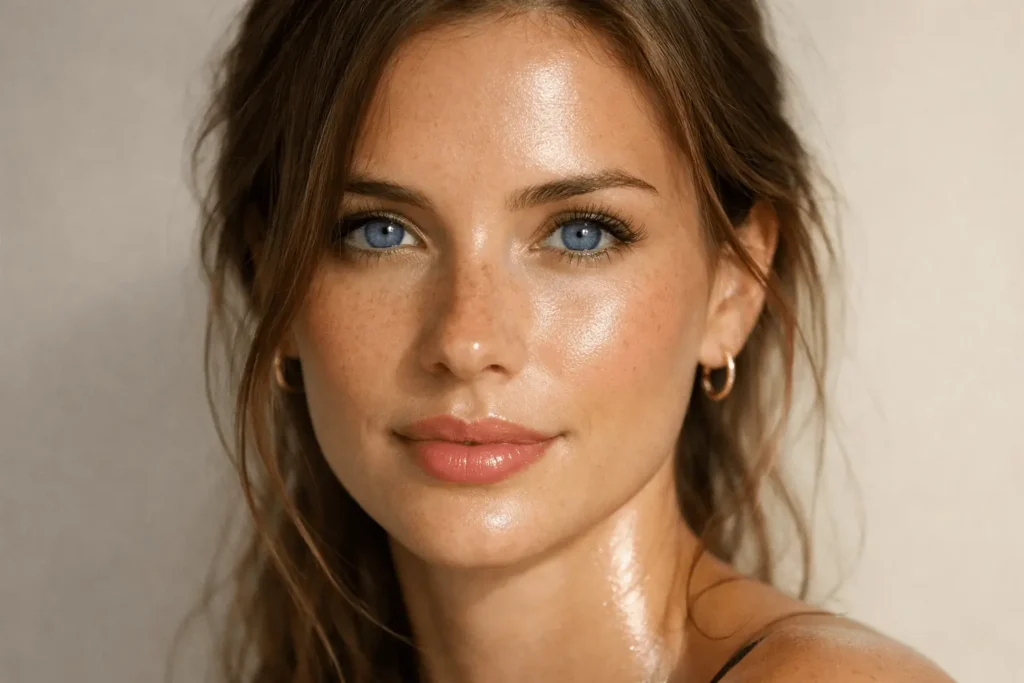
Prompt: “Close-up portrait of a woman aged 30 with blue eyes, with subtle freckles, realistic style of photography, with natural sunlight, with a neutral background, soft shadows and a glossy skin. –s 150 –no flaws.” This creates an excellent headshot that is perfect for editorials or profiles. The descriptors provide realistic details, and the parameters determine the composition.
Example 2: Fantasy Landscape
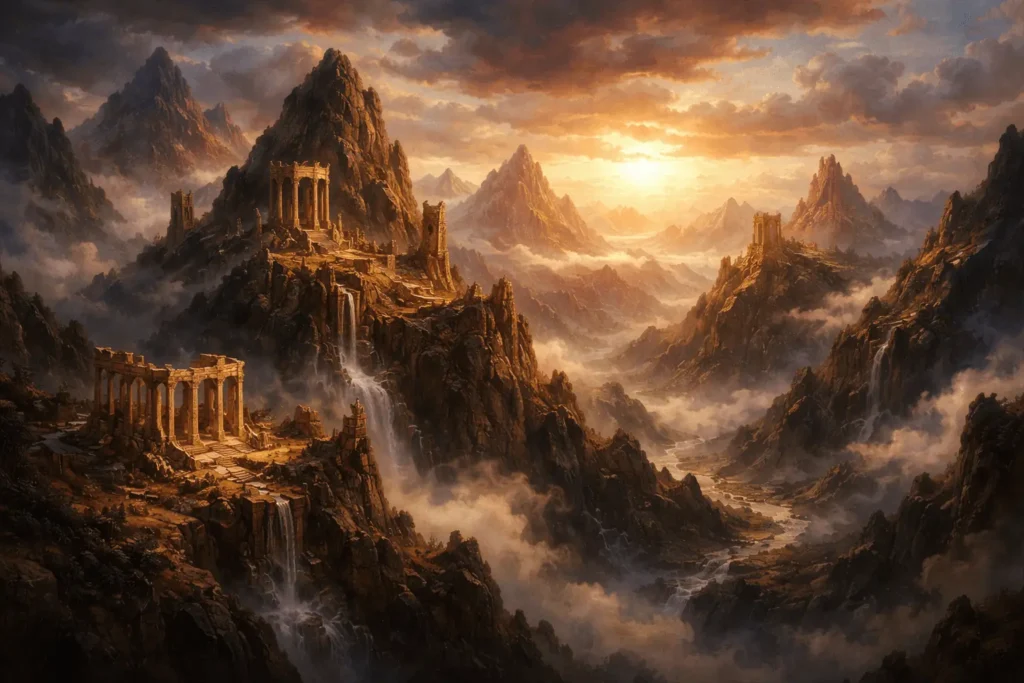
Prompt: “Epic mountain range with the ruins of ancient times, atop mountains and dramatic clouds in a surreal oil painting style at sunset, with warm golden tones, deep shadows with misty valleys– ar 16:9– chaos 15, –q 2.” Ideal for concept art, creating an immersive scene that has a sense of depth and atmosphere.
Example 3: Cyberpunk Cityscape
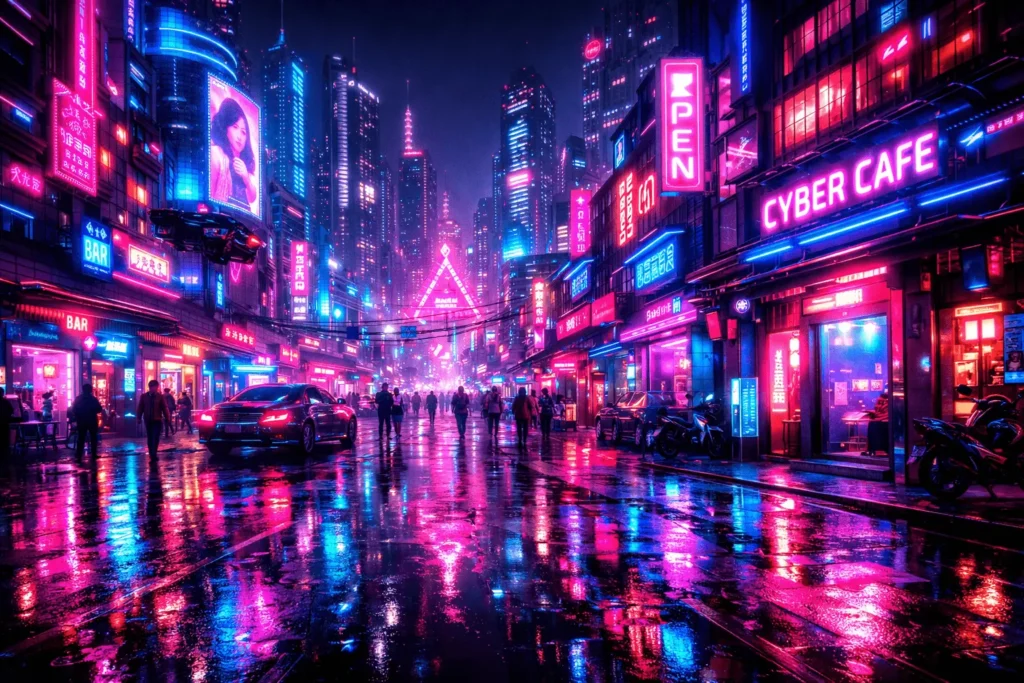
Prompt: “Futuristic cityscape with neon-lit high-rises as well as bright signs and bustling streets with cyberpunk-inspired digital art in the night, with reflections of the wet pavement, with vivid blue and fuchsia colours –ar 16:9 –s300.” This creates a futuristic urban landscape, perfect for illustrations of sci-fi.
Example 4: Abstract Character
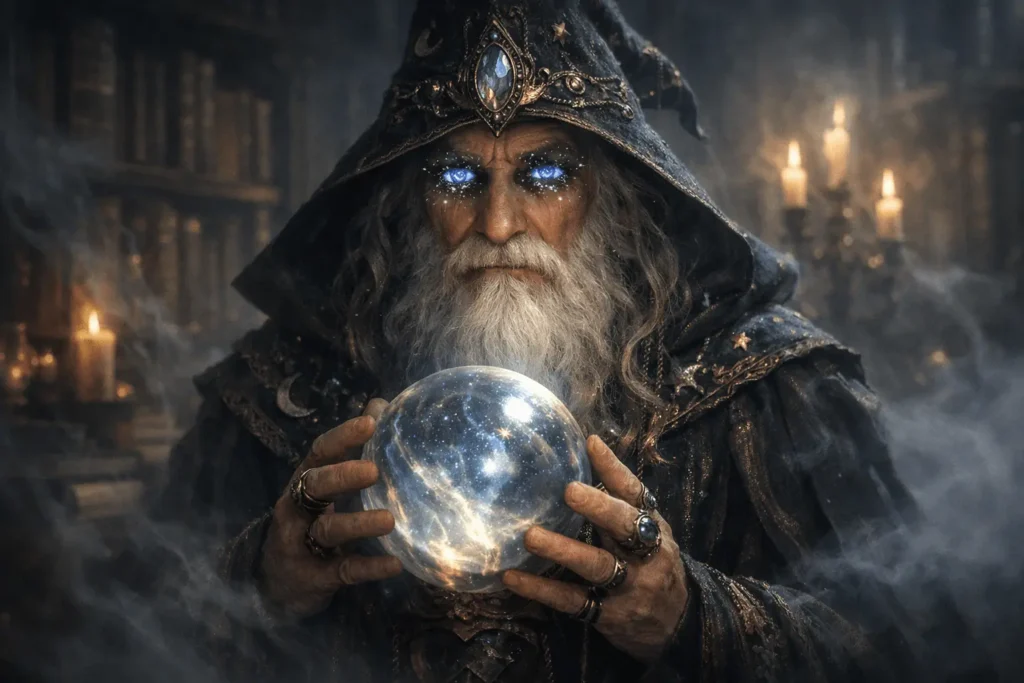
Prompt: “Mystical wizard holding a crystal orb, adorned and star-filled eyes, a fantasy illustrated style, set in a foggier antique library, a dark ambience lighting with an ethereal glow” ar 3:4 –seed 42.” Applicable for character design, locking a seed ensures reproducibility.
Example 5: Product Mockup
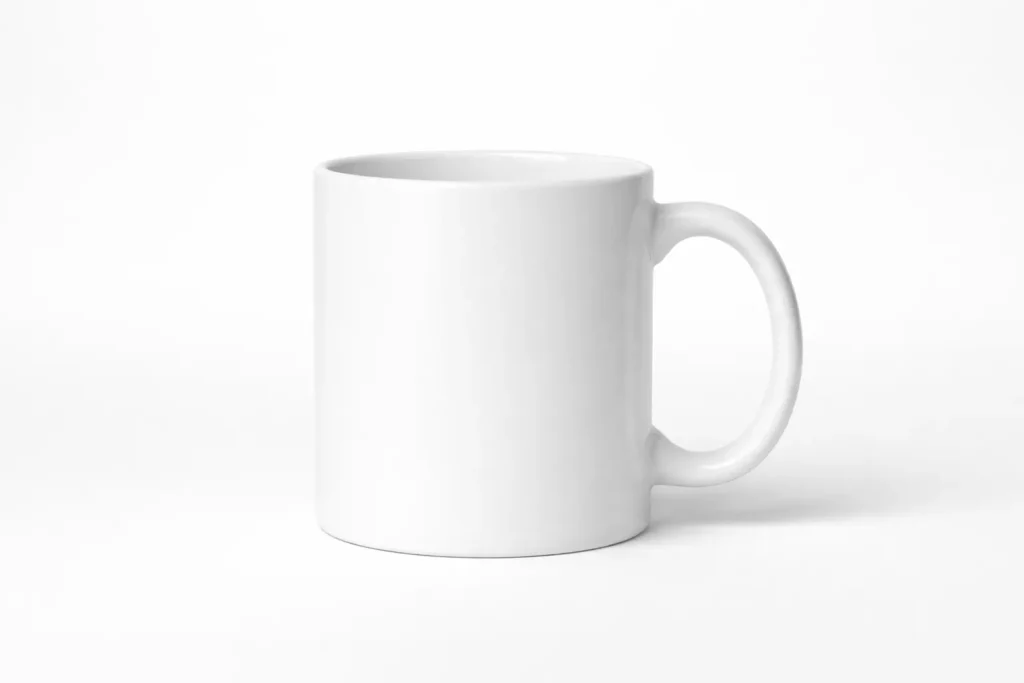
Prompt: “Ceramic mug on seamless white background, facing front with subtle shadows, a clean style of studio photography, Soft box lighting, accurate colour and minimal, 1:1, no text, s 120.” Perfect for online sales, this concentrates on simplicity and clear visuals.
Best MidJourney Prompt Formula: Quick troubleshooting checklist
- Is the output too abstract? Lower –stylise.
- Results too alike? Increase –chaos.
- Need finer detail? Increase –q (costlier).
- Composition off? Make composition directives appear earlier in your prompt (e.g., “close-up”, “bird’s-eye “).
Best MidJourney Prompt Formula: Advanced Tips and Techniques
To increase the quality of your prompts, try experimenting with synonyms. If the results aren’t satisfactory, substitute the library with a room full of books. Use positive phrases to direct your AI effectively, redefining negatives such as not Cartoonish as realistic sketch.
Leverage V6 has features that improve accuracy, including –cref to ensure consistency of characters across images. Start with a simple step and repeat, generate, then mix it up using V buttons, or use the shorten option to give simple suggestions.
Utilise tools like ChatGPT to refine your vision, write your idea in broad terms, and then add more details. To make it more diverse, change to chaos; for art, you can increase the –s to 775.
The most common mistakes are over-detailing, which could confuse the AI, or ignoring aspect ratios, resulting in cropped outputs. Check out parameters using private Discord DMs so that you can test them in private.
My Final Thoughts
Understanding the Midjourney prompt formula can transform simple experimentation into a purposeful process. Focusing on subject descriptors, style detail, context and parameters, you will be able to create stunning visuals that are tailored to your needs. For professional designs or for fun exploration, practising and iteration are essential. Begin with the templates provided and then tweak them to meet your requirements, and then let your ideas grow into life. With constant updates like V6, Midjourney continues to challenge the limits of AI art and makes it possible for anyone to create stunning pictures.
FAQs
1. What is the best Midjourney prompt?
A well-written prompt is short, clear, precise, and organised around the most essential elements, such as the subject or the style. It is a balance of description and AI adaptability to ensure optimal results.
2. How can I utilise the parameters of prompts?
Add them to the description by adding — for example, –ar 9:16 in vertical formats, or –q 2 to improve the quality. They are refined without changing the fundamental concept.
3. Do I have the ability to reference images in my prompts?
Yes, you can add URLs to the beginning of your file to provide style inspiration or use –cref with the weight (–cw) to ensure consistency of character within V6.
4. Why do my photos look different every time?
Midjourney is a randomisation technique. Make use of –seed by introducing an integer to replicate similar results.
5. What are the best ways to remove components from a photo?
Use the option –no, then followed by an item such as –no people, in order to eliminate features that are not needed.
6. Is there a preferred version of Midjourney for you to make use of?
V6 has improved clarity and precision; choose it using /settings, or select the prompts for –v 6.
7. What happens if my prompt isn’t long enough?
Reduce it by using the shorten command, which provides streamlined versions but still maintains its essence.
8. Can Midjourney create characters with a consistent look?
With the help of –cref and an image of a reference, it is ideal for stories or series.
9. How can I create more innovative outputs?
Add chaos to the –chaos parameter for more variation or –s to stylise, and play with a variety of stylistic combinations.
10. Are there limitations on the length of a prompt?
Midjourney can handle up to 4,000 characters; however, smaller questions (under 100 characters) are generally more effective.
Also Read –
Midjourney Prompts Explained: The Secret to Perfect AI Art
Midjourney Tips and Tricks: Master the Art of AI Image Generation