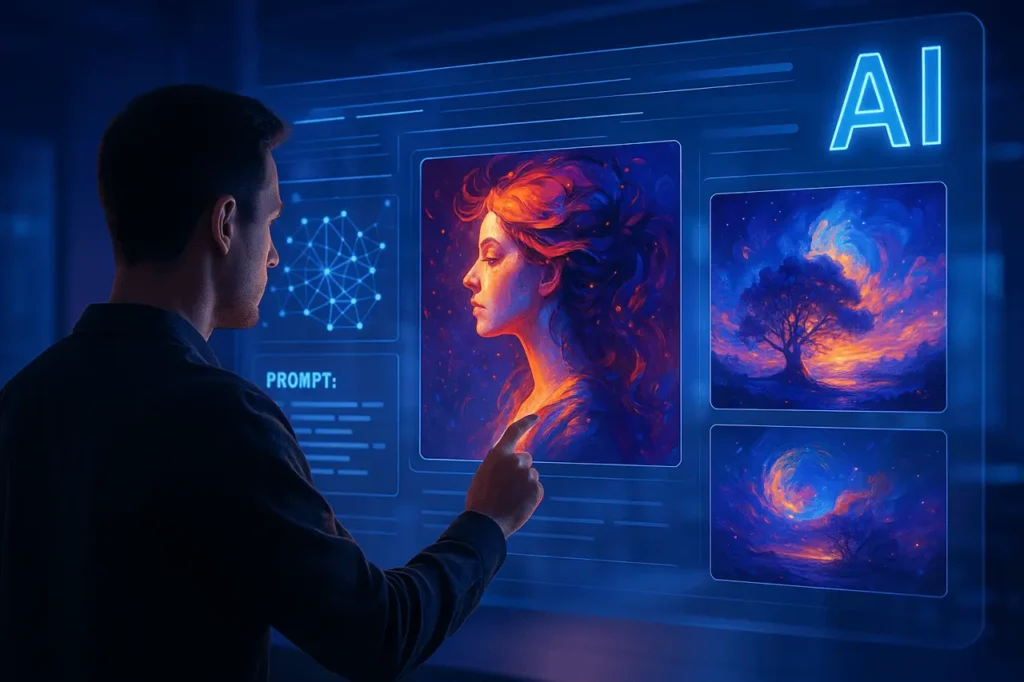
Midjourney has evolved into a highly innovative and efficient AI tool that creates amazing digital art concepts, conceptual designs, and even images. No matter if you’re a digital artist, designer, or even an author, the Midjourney features and techniques can dramatically improve the quality and accuracy of your work.
In this article, we’ll provide the most effective Midjourney tips and tricks to aid you in creating professional, precise, and visually appealing AI images. We’ll also provide the answers to frequently asked questions that will help you get the most value from this fantastic platform.
What is Midjourney?
Midjourney is an advanced AI-powered image-generating tool that transforms text-based prompts into precise, high-quality images. It is primarily operated through Discord, which allows users to interact with the Midjourney bot by responding to instructions and messages. The AI will then process the inputs to create images that are in line with your preferences for abstract photography and art, to produce ideas, and even landscapes.
Midjourney employs machine learning models that are trained on vast amounts of text and images, which allows it to comprehend lighting styles, artistic styles, composition, context, and lighting with incredible accuracy.
Why You Need Middlejourney Tricks and Tips: A Full Guide
Although it is user-friendly, getting reliable, professional results takes more than simply writing random prompts. How you compose your prompt, select aspect ratios, or parameters such as the –v and –stylize will dramatically affect the final image.
By gaining advanced Midjourney techniques and learning advanced Midjourney tips, you can:
- Develop more coherent and detailed visuals.
- You can control the mood, style, and quality of your photos.
- You can save time by avoiding errors that are prompt and Regenerations.
- Make yourself stand out with a distinctive design and optimised designs.
1. Craft Prompts that are clear and descriptive.
The basis of a successful Midjourney report is in what you prompt. The more precise your prompt is, the better the outcome.
Example:
In place of “
“A cat in an area”
Try:
“A sweet orange kitten, sitting on a Victorian armchair by an open fireplace, Cinematic lighting and ultra-realistic photographic style with an 85mm lens.”
Prompts for crafting:
- Use adjectives (e.g., “elegant,” “futuristic,” “gritty”).
- Please specify the lighting and mood (e.g., “golden hour”, “moody shadows”).
- Include camera information to give real-looking images (e.g., “macro lens,” “depth of field”).
- Mention art styles (e.g., “cyberpunk,” “Renaissance oil painting,” “Studio Ghibli style”).
2. Utilize Parameters to the Fullest
Midjourney parameters allow you to customize and enhance your results. The parameters are placed at the conclusion of your prompt with two dashes ( –).
Common Parameters
ParameterDescriptionExample
–ar Adjusts the aspect ratio (16:9) for widescreen
–v Sets model version V 6 to get the latest Version
–q Quality (1=default Quality, 2=high) –q 2
Stylize the HTML0 code –s Controls artistic freedom –s for high-end creativity. for high-creativity
–chaos Randomness is added –chaos 50
–no Eliminates unwanted elements. There is no text, watermark
The experimentation with these parameters will give you more control over composition, creativity, and visual quality.
3. Learn to Remix and Upscale
Midjourney lets you upscale and mix images after they have been created.
- Upscaling increases the clarity and detail of an image. Ideal for printing or displaying in a large size.
- Remix Mode allows the modification of an image you already have by altering options or parameters. Turn on Remix Mode by entering “/prefer remix”.
Use case example:
Created an image of “a dream castle at sunset,” but want a winter version?
Simply remix it using “snow-covered fantasy castle in the twilight, cool lighter tones.”
4. Control Composition using Aspect Ratios
By default, Midjourney generates image squares ( –ar 1:1). You can change your dimensions for specific purposes:
- 16:9 is ideal for wallpapers as well as YouTube thumbnails.
- 4:5 — great for Instagram posts.
- 9:16 is suitable for mobiles and reels.
Example:
Imagine a futuristic night skyline of a city — a 16:9
This will ensure that your photo is in the correct format, with no awkward cropping.
5. Reference Images to Ensure Consistency
It is possible to include the image reference link at the top of the question. Midjourney uses the image as a reference for composition, colors, or design.
Example:
/imagine https://example.com/image.jpg futuristic armor concept, photorealistic, cinematic lighting
This technique is essential for ensuring Consistency in characters, concepts, for products or branding visuals.
6. Play around with the Stylize Values
The stylistize or the –s parameter determines how literal or artistic an AI’s interpretation of the data is.
- Low-value ( –s 50) More genuine.
- Medium ( –s 250-500) Achieved balance in creativity.
- Very High ( –s 1000+) Abstract and artistic.
If you are looking for real-world control, go with lower stylization. For art or fantasy works, take a step higher.
7. Use the “No” Parameter to Exclude Elements
Sometimes, Midjourney may add unneeded details like logos, text, or other artifacts. Make use of the –no parameter to eliminate these.
Example:
Logo design of a head of a wolf, with no text background or watermark.
This will result in more precise and better-focused results.
8. Mix Styles and Artists
You can combine different artistic styles or influences on artists to create a unique aesthetic.
Example:
A surreal landscape based on the likeness to Salvador Dali and Studio Ghibli, with soft shades and cinematic lighting
Mixing styles creates distinctive outcomes that stand out in innovative projects.
9. Use prompt weights to help balance.
Midjourney lets you highlight or reduce the emphasis of your prompt by using double colons.
Example:
cat::2 dog::1 forest background
In this case, the AI will be able to prioritize cats twice as highly as a dog.
This method is helpful in situations where you need specific elements to be the primary focus of your composition.
10. Save the file and Compare Variations
If Midjourney produces four different versions, save all of them before deciding which one to increase the quality. Each Version provides insights into how prompt tweaks impact the output. As time passes, you’ll gain the ability to recognize what you need to do to achieve your goals.
Advanced Tip: Combine Prompts with Models
You can mix multiple prompts or styles of reference to create hybrid designs.
Example:
A futuristic vehicle design and detailed concept art, Retro 1960s style 6-v –ar 16:9
This is a well-balanced blend of classic and modern styles.
Branding benefits of Midjourney Mastery
If you’re utilizing AI art to help with business, Midjourney will help you:
- Create brand-named visuals to be used on blogs, YouTube, and social media.
- Design unique product concepts.
- Create high-quality thumbnails that increase the click-through rate.
- Reduce the cost of design while preserving professional appearance.
Final Thoughts
Learning Midjourney is a process in and of itself. When you understand the ways that prompts, parameters, and compositions function together and how they interact, you can go from random results to deliberate art. When you’re making conceptual art, brand images, or digital art, these Midjourney tricks and tips will allow you to unlock the full potential of Midjourney.
Keep it up, be bold, and always remember that every prompt will teach you something new about how AI perceives creativity.
Frequently asked questions (FAQs)
1. What is the most effective Version of Midjourney that you can employ?
The most recent Version (currently v6) provides better quality, coherence, and clarity. Always include this information in your prompt to get the best results.
2. Can I make use of Midjourney images commercially?
If you are on an active plan that is paid for, you can use the generated images for commercial purposes, according to the Midjourney license policy.
3. How do I make my photos appear more realistic?
Use keywords that are related to photography, such as “cinematic lighting,”” 8k,” “35mm lens,” and real-world proportions. Lower stylization values can also be helpful.
4. Why is it that Midjourney often includes logos or text?
Midjourney may mimic text elements in training data. Make sure to use no text to avoid this.
5. How do I ensure Consistency across all images?
Utilize reference images, keep prompts organized similarly, and activate Remix Mode for minor changes without compromising the style consistency.
Also Read –